Imagine a seemingly ordinary night, a 17-year-old girl biking home, and then, in an instant, everything changes. The chilling reality of Lisa McVey's True Story & Abduction Details isn't just a tale of terror; it's an extraordinary account of survival, strategic thinking, and an enduring legacy that reshaped law enforcement protocols across the nation.
This isn't a story to be taken lightly, but it is one that offers profound insights into human resilience. Lisa McVey's ordeal with serial killer Bobby Joe Long in Tampa, Florida, in 1984, wasn't just a personal nightmare; it became a catalyst for change, empowering victims and equipping those sworn to protect them.
At a Glance: Lisa McVey's Unforgettable Journey
- Who: Lisa McVey, a 17-year-old, abducted by serial killer Bobby Joe Long.
- When: November 3, 1984, for 26 harrowing hours.
- Where: Tampa, Florida.
- How: Long, impersonating a police officer, abducted Lisa while she biked home.
- Survival: Lisa employed extraordinary tactics, including humanizing herself, meticulously memorizing details of her captivity, and strategically scattering her DNA.
- Escape: She negotiated her release, making a promise she knew she wouldn't keep, and then ran for her life.
- Aftermath: Lisa's incredible recall led directly to Bobby Joe Long's capture and conviction for multiple murders.
- Legacy: She became a police officer, training others, and her case fundamentally changed how law enforcement handles evidence, interviews victims, and shares critical information.
The Night That Changed Everything: November 3, 1984
It was a quiet early morning in Tampa, Florida. November 3, 1984. Seventeen-year-old Lisa McVey was doing what many teenagers do: biking home after a late shift, the suburban streets likely feeling safe and familiar at around 2 AM. But this night would shatter that sense of security forever.
Suddenly, a car pulled up, and a man, chillingly impersonating a police officer, ordered Lisa into his vehicle. The man was Bobby Joe Long, a predator whose reign of terror had already claimed several lives and would continue if Lisa didn't intervene. She was snatched from the street, pulled into the terrifying unknown, and driven to a secluded apartment that would become her prison for the next 26 hours. The initial shock and fear were immense, but what unfolded next was a masterclass in survival under unimaginable duress.
Surviving the Unthinkable: Lisa's Strategic Captivity
From the moment she realized the gravity of her situation, Lisa McVey shifted from being a passive victim to an active strategist. Her approach was not one of panic, but of calculated resistance and observation, a testament to her innate strength.
Humanizing the Monster
One of Lisa's most crucial tactics was to humanize herself to her captor. She shared personal details, talked about her family, and spoke of her fears and aspirations. This wasn't a plea for mercy as much as it was an attempt to make her less of an object and more of a person in Long's eyes. Psychology suggests that when a captor sees their victim as a human being with a life and loved ones, it can sometimes complicate their capacity for extreme violence, or at least buy time. Lisa instinctively understood this.
A Mind Like a Map: Memorizing the Environment
Held captive in Long's apartment, Lisa didn't simply endure; she observed. Every detail became a piece of a mental map she was building, a potential key to her freedom or her captor's identification. She meticulously noted:
- Ceiling cracks: Specific patterns, locations, and unique formations.
- Carpet patterns: Colors, wear, and distinctive designs.
- Outdoor sounds: The distant hum of traffic, the chirp of specific birds, the occasional train whistle.
- Internal layout: The number of steps, the feel of different surfaces.
She even counted floor tiles – 64 in the living room, 32 in the bedroom – a powerful mental exercise to stay grounded, focused, and present, preventing her mind from succumbing to despair. This incredible attention to detail would later prove invaluable to law enforcement.
Leaving a Trail: Strategic DNA Placement
Lisa understood the power of evidence. During her captivity, she intentionally scattered her DNA throughout Long's apartment. She left strands of her hair in the shower drain and made sure skin cells would adhere to lamps and other surfaces she touched. This wasn't just about leaving a trace; it was about creating a forensic breadcrumb trail that could connect Long to her, even if he tried to clean up. This proactive approach to evidence has been a key component in post-abduction investigations.
Profiling the Captor
Lisa's observations extended to Bobby Joe Long himself. She paid close attention to his habits, particularly his meticulous grooming. This led her to a chilling but practical conclusion: someone so fastidious about his appearance would likely want to dispose of a body neatly, minimizing the chance of leaving evidence. This insight fueled her determination to ensure she wouldn't become "a body."
The Calculated Escape: A Promise to Survive
After 26 harrowing hours, Lisa's strategic thinking culminated in a planned escape. It wasn't a violent struggle but a masterful negotiation.
She made a solemn promise to Long: she wouldn't tell anyone what had happened. To bolster her credibility, she fabricated a story, claiming that witnesses had seen her get into his car, making him believe his identity was already compromised if she went missing. Then, she introduced a practical problem, stating she was menstruating, which would create a messy situation in his car and apartment if she remained with him. This combination of "promise," "witnesses," and "practical inconvenience" seemed to tip the scales.
Long, perhaps believing her threats and wanting to avoid more complications, finally agreed to drop her off. He drove her to a secluded spot and gave her a chilling command: count to 10,000 before moving. Lisa, ever the strategist, counted to 100, then ran. She ran until she found a phone, reaching out for help and setting in motion the chain of events that would ultimately lead to her captor's downfall.
From Victim to Investigator: Lisa's Crucial Role in Long's Capture
Lisa McVey's ordeal didn't end with her escape; it transformed into an active partnership with law enforcement. Her recall was nothing short of miraculous, a direct result of her mental mapping during captivity.
Working closely with detectives from the Hillsborough County Sheriff's Office, Lisa provided an astonishingly detailed description of Long's apartment, including the specific cracks in the ceiling. This detail, seemingly minor, proved to be the linchpin. Detectives remembered a crime scene photo from an unrelated investigation – another Bobby Joe Long victim – that showed the exact same ceiling cracks. It was the crucial piece of evidence that connected the two cases, confirming Long was the perpetrator and leading directly to his capture.
The details Lisa provided, verified by Hillsborough County Sheriff's Office case archives and Florida vs. Long trial records, were instrumental. She later testified for seven grueling hours during the trial, recounting her experience with unwavering composure and precise recall, solidifying the case against Bobby Joe Long. Long was convicted for multiple murders and, decades later, was executed by lethal injection on May 23, 2019, with Lisa McVey present to witness the culmination of justice.
Beyond Survival: Lisa McVey's Enduring Legacy
Lisa McVey's story could have ended with her survival and her captor's conviction. But for Lisa, it was just the beginning of a profound commitment to ensure that others might survive and that law enforcement would be better equipped to handle such horrific crimes.
A Badge of Honor: Becoming Officer McVey
Years after her abduction, Lisa McVey joined the Hillsborough County Sheriff's Office, the very agency that had helped save her. Her patrol car number, 184, was a poignant nod to the year of her abduction – 1984 – a constant reminder of where she came from and why she serves. She channeled her trauma into purpose, dedicating her life to protecting others and advocating for victims.
Rewriting the Rules: Impact on Law Enforcement Protocols
Lisa's case wasn't just about one individual's survival; it fundamentally changed how law enforcement operates. According to FDLE's case study on evidence collection improvements post-1984, her experience directly led to several critical advancements:
- Enhanced Evidence Collection for Sex Crimes: Florida overhauled its procedures, recognizing the importance of even minute details.
- Specialized Dispatcher Training: Dispatchers now receive specific training for handling kidnapping calls, understanding the nuances of victim statements and rapid response.
- Cognitive Interviewing Techniques: Lisa's incredible recall highlighted the potential of a victim's memory, leading to the development and widespread adoption of "cognitive interviewing," a technique designed to maximize information retrieval from traumatized individuals without leading them.
- Increased Victim Compensation Fund: The state's victim compensation fund saw a significant 40% increase, providing more resources for victims to heal and rebuild their lives.
- Improved Evidence Kits: Evidence kits now include specific containers designed for collecting hair and other debris, acknowledging the strategic value of such traces.
- Mandatory Regional Databases: Long exploited the previous lack of information sharing between jurisdictions, committing crimes across three counties without law enforcement making the connection initially. Lisa's case underscored this critical flaw, leading to the establishment of mandatory regional databases to ensure crimes and suspects are tracked more effectively across different areas.
Teaching Resilience: Environmental Tagging and Victim Support
Today, Lisa McVey uses her harrowing experience to help other victims and to train law enforcement officers. She teaches crucial survival techniques, including what she calls "environmental tagging" – the deliberate act of leaving identifiable traces and memorizing specific details during captivity. Her message is clear: even in the darkest moments, there are ways to fight back, to leave a mark, and to arm future investigators with the information they need. Her work emphasizes that victims can become powerful advocates and teachers.
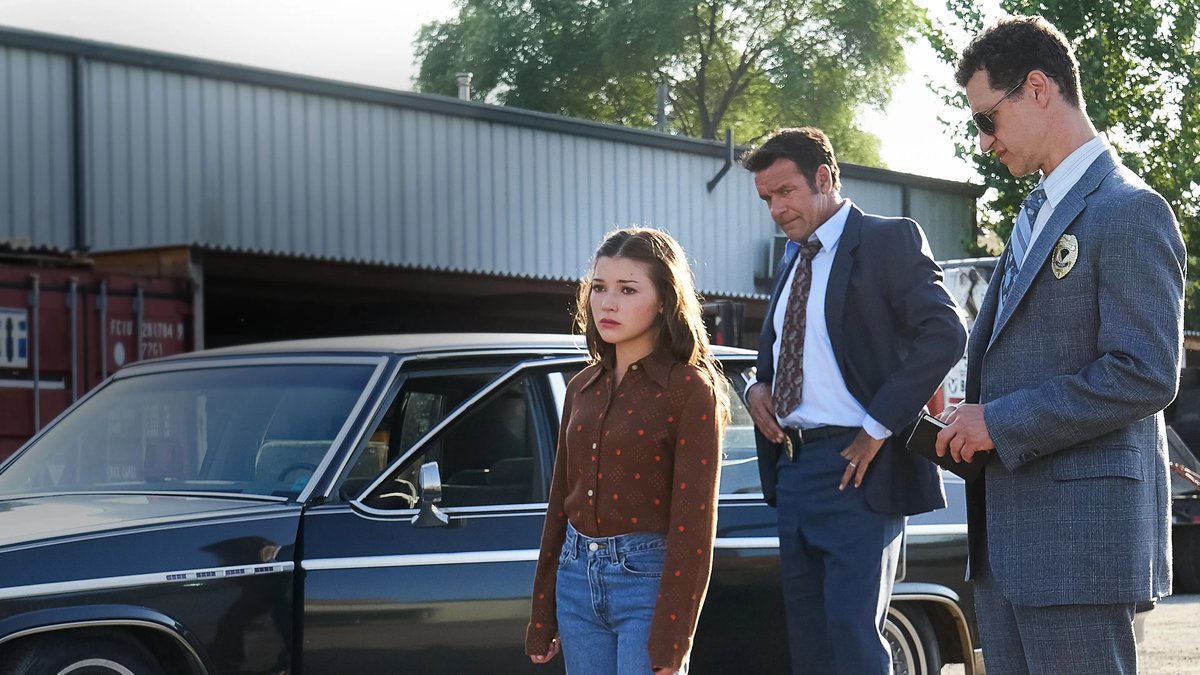
Her story's profound impact has naturally led to its adaptation into various media. There have been documentaries and books, including her own 2020 memoir, "Surviving the Unthinkable." In 2018, her journey was brought to the screen in the made-for-television movie, "Believe Me: The Abduction of Lisa McVey." While the movie is approximately 80% accurate, it does, like most dramatizations, sanitize some of the brutality and dramatize certain aspects for narrative effect. For those interested in the portrayal, you can Meet the cast of Believe Me and explore the actors who brought her story to life.
Lessons in Courage: What Lisa McVey's Story Teaches Us
Lisa McVey's journey is far more than just a crime story; it's a powerful blueprint for resilience, courage, and the unwavering human spirit. It highlights several critical takeaways:
- Strategic Thinking Under Duress: Her ability to shift from fear to calculated observation and action is a remarkable lesson in mental fortitude. It teaches us that even when confronted with overwhelming power, a mind focused on survival can find ingenious pathways to safety.
- The Power of Detail: Lisa's meticulous recall proved that seemingly small details—a crack in a ceiling, a carpet pattern—can become monumental clues that break open a case. This underscores the importance of observation, not just for victims but for everyone.
- Empowerment Through Agency: Lisa chose to fight back, not with physical force, but with her intellect and her will to survive. Her story empowers victims, showing that they are not helpless, and their actions can have a profound impact on their outcome and the pursuit of justice.
- The Weight of Trauma, Carried with Grace: Lisa's life demonstrates that while trauma leaves its mark, it does not have to define or crush an individual. She has chosen to carry her experience not as a burden, but as a source of strength and a tool for helping others, embodying true post-traumatic growth.
Her journey serves as a beacon for law enforcement, emphasizing the need for continuous improvement, inter-agency cooperation, and a victim-centric approach to investigations. It's a living example of how one person's ordeal can create a lasting, positive impact on an entire system.
A Legacy of Strength and Change
Lisa McVey's true story is a compelling narrative of a young woman who faced unimaginable terror and emerged not only a survivor but a beacon of hope and a force for change. Her strategic brilliance during captivity, her unwavering commitment to justice, and her dedication to improving law enforcement protocols have left an indelible mark.
Her legacy reminds us that even from the darkest experiences, immense strength and transformation can emerge. It's a testament to the fact that every detail matters, every voice counts, and the human spirit, when tested, can reveal an extraordinary capacity for resilience and purpose. Lisa McVey's journey is a powerful reminder that while evil may exist, courage, intelligence, and compassion can ultimately prevail.